
Private co-working in Lekki is concentrated along the Ikate corridor, where The Palmington’s exclusive 8-desk layout on 6 VFC Close, off Meadow Hall Way defines the benchmark standard for focused output and intentional professional networking.
What Amenities Should a Premium Co-Working Space in Lekki Include?
Evaluating a co-working hub in Lagos is not simply about finding an empty seat with a power outlet. Executives, remote professionals, and independent consultants operating at a serious level need an infrastructure stack that supports sustained output—particularly in an environment where NEPA outages, slow shared internet, and ambient noise remain real productivity threats.
The following checklist represents the minimum acceptable standard any serious co-working hub in Lagos should meet before you commit time or Naira to a subscription.
- Dedicated fiber internet: Shared café-grade broadband is insufficient for video calls, cloud uploads, and real-time collaboration tools. A premium workspace must run dedicated fiber—not a consumer line split across dozens of users.
- Individual ergonomic workstations: Prolonged seated work demands lumbar support, correct desk height, and screen clearance. Generic plastic chairs at communal tables are a long-term musculoskeletal liability, not a workspace solution.
- Reliable power backup: In Lagos, generator capacity is non-negotiable. A serious co-working space should maintain seamless power continuity so that NEPA outages cause zero interruption to active sessions.
- Controlled acoustic environment: Open-plan offices filled with phone calls and vendor negotiations destroy deep-work concentration. A professional-grade hub enforces quiet-zone standards, separating focused workspaces from communal interaction areas.
- Full air-conditioning: In a Lagos climate that runs warm year-round, with humidity peaking during the April-to-October rainy season, consistent air conditioning is a productivity variable, not a luxury add-on.
- Limited, intentional membership capacity: The smaller the member cap, the higher the quality of environment and networking opportunity. A space with 8 desks guarantees a curated, distraction-free atmosphere that a 200-seat open floor cannot replicate.
- Accessible location with viable commute logic: Proximity to Ikate, Lekki Phase 1, and Victoria Island—without forcing members across the Third Mainland Bridge during peak hours—is a material professional advantage.
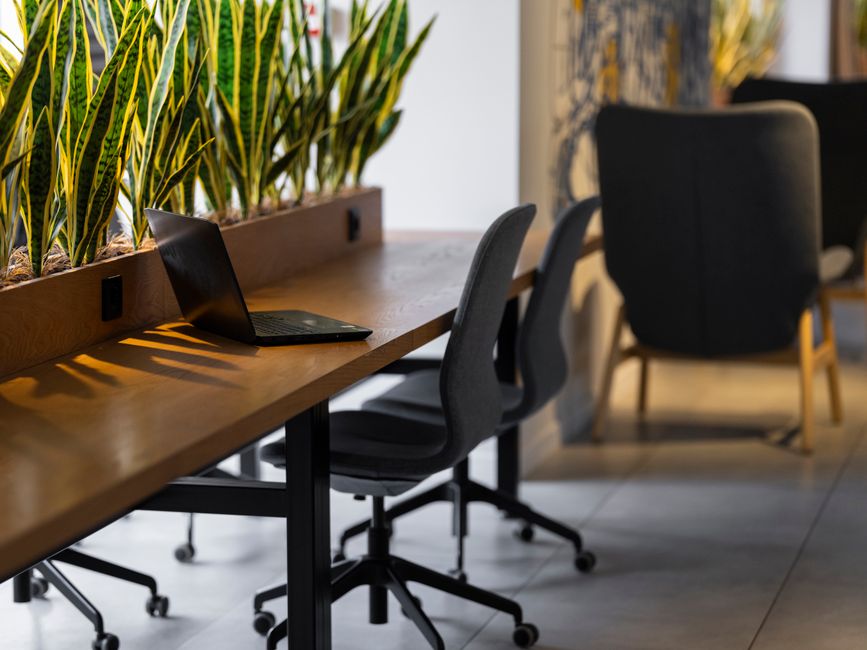
The Palmington was designed around precisely these criteria. Its 8-person shared co-working layout is intentionally exclusive, prioritising the quality of environment over raw headcount.
How Much Does Daily Co-Working Cost in Lagos, and Which Access Model Fits Your Work Pattern?
One of the most common questions professionals ask when evaluating co-working hub vendors in Lagos is whether to commit to a subscription or pay on a daily basis. The honest answer depends entirely on your work cadence, your need for guaranteed desk availability, and your budget planning horizon.
The table below maps the three primary access models used by premium co-working spaces in Lagos, outlining what each tier typically delivers in terms of pricing expectations, access consistency, and professional value.
| Access Model | Typical Commitment | Desk Availability | Best Suited For | Cost Structure |
|---|---|---|---|---|
| Daily Access | Single day, pay-as-you-go | Subject to availability — not guaranteed | Visiting professionals, one-off project sprints, or first-time evaluation of a new hub | Variable daily rate; highest per-unit cost across all models |
| Monthly Subscription | Rolling 30-day commitment | Reserved desk access during operating hours | Remote employees, freelancers with consistent weekly output targets, Lagos-based consultants | Fixed monthly fee; material cost savings versus daily equivalents |
| 3-Month Subscription | Quarterly commitment block | Priority reserved access; maximum planning certainty | Executives on project contracts, founders building early-stage companies, professionals relocating to Lekki | Lowest effective daily rate; maximum Naira value across all tiers |
At The Palmington, all three access tiers are available, though daily access operates subject to desk availability within the 8-person capacity limit. This constraint is intentional: it protects the quiet environment and networking quality that monthly and quarterly members pay to preserve. If your work pattern is consistent—four or five days per week—a monthly or three-month subscription will always deliver superior value and reliability over a daily pay-as-you-go arrangement.
Operating hours at The Palmington run Monday to Friday, 9:00 AM to 6:00 PM. The space is closed on weekends, which is a deliberate design choice. A strictly weekday schedule signals that this is a professional productivity environment, not a drop-in lounge. Plan your working week accordingly.

What Are the Internet Speed Requirements for Serious Remote Work in Lagos?
Internet infrastructure is where many co-working hub vendors in Lagos quietly underdeliver. The marketing says “high-speed Wi-Fi”; the reality is often a consumer-grade fibre line shared across too many simultaneous users during peak hours, with speeds that collapse precisely when you need them most.
For context, here are the minimum bandwidth demands of a standard professional workload in 2026:
- Video conferencing (HD): A minimum of three to five Mbps upload and download per active call. Four simultaneous calls on a shared line will expose any undersized connection immediately.
- Cloud-based collaboration tools: Platforms such as Notion, Figma, Google Workspace, and Salesforce require consistent low-latency connections to function without constant buffering or sync failures.
- Large file transfers and VPN tunnelling: Professionals in finance, legal, architecture, and media routinely move large files and operate behind corporate VPNs that impose additional bandwidth overhead.
- Simultaneous multi-device use: A single professional typically runs a laptop, a second monitor, a smartphone hotspot backup, and occasionally a tablet. Each device places independent demands on the network.
The only reliable solution to this challenge is a dedicated fiber line—a connection reserved exclusively for the co-working space’s members, not shared with adjacent commercial tenants or a broader building network. The Palmington operates on a fast, dedicated fiber internet service for precisely this reason. When you are mid-presentation to a client in London or filing a deadline-sensitive brief, the quality of the connection beneath you is not a secondary consideration.
Why Does the Size of a Co-Working Space Directly Affect Your Professional Networking Outcomes?
This is the dimension of co-working that most Lagos professionals undervalue when selecting a hub. The prevailing assumption is that larger spaces offer more networking opportunity—more people means more potential connections. In practice, the inverse is frequently true.
Professional networking operates most effectively within constrained, high-quality environments. When a co-working space caps its membership at a deliberately small number, several dynamics shift in the member’s favour:
- Recurrence builds familiarity: Seeing the same eight professionals daily across a working week creates organic familiarity at a depth that a transient 200-seat hub cannot replicate. Referrals on WhatsApp between Lekki professionals almost always flow through trusted, repeated contact—not one-time corridor encounters.
- Calibration by proximity: In a curated 8-desk environment, the professionals you sit alongside have, by definition, chosen the same premium standard you have. The membership itself is a soft qualification signal.
- Reduced friction for spontaneous collaboration: Small-scale environments allow quiet, purposeful conversation without disrupting the room. A question across a compact workspace leads to an introduction; that introduction leads to a retained client or a strategic partnership.
- No dilution of atmosphere: Every additional desk in an open-plan hub introduces additional noise, visual clutter, and competing agendas. A strict cap maintains the professional atmosphere that makes sustained deep work—and therefore high-value networking—possible in the first place.
The Palmington’s choice to hold its co-working layout at exactly 8 desks is not a capacity limitation. It is a deliberate networking architecture decision. The professionals who understand this distinction are typically the ones who book early.

How Do You Evaluate the Location of a Co-Working Hub in Lagos Before Committing?
Location logic in Lagos is more complex than a Google Maps pin. A workspace that appears close on a map can represent a 90-minute commute during peak Lekki-Epe Expressway traffic. Before signing any co-working subscription in Lagos, a commercially intelligent professional should run the following location assessment:
- Island-side positioning: For professionals whose clients are concentrated on Victoria Island, Ikoyi, or Lekki Phase 1, a workspace that keeps you on the island-side removes the Third Mainland Bridge variable entirely. This is a material quality-of-life and punctuality advantage.
- Proximity to key estate clusters: Ikate sits at a functional intersection of Lekki’s executive residential and commercial belt. Still Waters Garden Estate Road and Meadow Hall Way are well-established professional corridors with predictable traffic patterns.
- Rainy season accessibility: Between April and October, flooding on secondary roads can render otherwise convenient addresses unreachable for hours. A co-working hub on a well-drained, recognised road—rather than a low-lying back street—is a seasonal operational consideration, not a minor detail.
- Proximity to amenities: Banks, pharmacies, quality food options, and fuel stations within a short radius reduce the midday friction that disrupts a full working day.
The Palmington is located at 6 VFC Close, off Meadow Hall Way / Still Waters Garden Estate Road, Ikate, Lekki—a location that satisfies all four criteria above for professionals operating across the Lagos Island corridor.
If you are ready to evaluate whether The Palmington fits your working pattern, daily requirements, or quarterly productivity goals, the most direct step is to make contact. Visit https://thepalmington.com/contact to confirm availability, discuss access tiers, or arrange a viewing of the space before committing to a subscription.
Frequently Asked Questions
A daily plan offers pay-as-you-go flexibility but at the highest per-day cost and with no desk reservation guarantee. A monthly subscription secures reserved access during operating hours at a significantly lower effective daily rate, making it the practical default for professionals with consistent weekly work patterns.
This varies by operator. The Palmington operates strictly Monday to Friday, 9:00 AM to 6:00 PM, and is closed on weekends. This weekday-only schedule is a deliberate design choice that maintains a professional working environment and distinguishes the space from casual drop-in lounges.
The Ikate corridor, just off Meadow Hall Way, is Lagos’s most established zone for premium boutique workspaces. The Palmington at 6 VFC Close, Ikate, Lekki offers an exclusive 8-desk environment with dedicated fiber internet and full air-conditioning—purpose-built for professionals who require genuine quiet and reliable infrastructure.
At minimum, a professional hub should run a dedicated fiber line—not a consumer-grade connection shared across adjacent tenants. HD video conferencing requires three to five Mbps per user; cloud tools and VPN usage add further overhead. Shared broadband that performs well at 7:00 AM will typically degrade significantly by midday under professional load.