
Lagos executives running confidential strategy sessions need a dedicated, acoustically controlled boardroom — not a partitioned hotel corridor. The Palmington‘s 20-seat Conference Room in Ikate, Lekki, with dedicated fiber internet and a self-contained tea/coffee station, is the benchmark private c-suite meeting space Lagos professionals book for exactly this purpose.
What Privacy Features Should a C-Suite Meeting Room Have?
Privacy in an executive meeting context is not simply about closing a door. It is a layered set of physical, digital, and procedural controls that protect sensitive financial disclosures, merger negotiations, board resolutions, and HR decisions from exposure at any point during the session.
The starting point is acoustic integrity. A room with thin drywall partitions, glass frontage, or an open ceiling grid connecting to adjacent spaces is a liability in any C-suite context. Sound travels through shared HVAC ducts, suspended ceilings, and lightweight partition walls — none of which are immediately visible during a rushed site inspection. Before any booking, executives or their assistants should request a quiet occupation test: sit inside the empty room and listen for ambient bleed from corridors, adjacent offices, or street-level noise. Lekki’s construction density makes this test more important than most people realise.
Access control is the second layer. Who can walk into the building, past the reception, and down the corridor toward your boardroom during a live session? A venue that hosts multiple events simultaneously — training classes, networking events, co-working drop-ins — creates uncontrolled foot traffic that directly undermines the discreet environment a c-suite meeting space Lagos executives depend on demands. The operational standard is a single-purpose, dedicated-access room where the only people in the immediate zone are those attending the meeting.
Visual privacy matters as much as acoustic privacy. Glass-walled rooms without opaque blinds or frosted film expose whiteboards, slide decks, and facial expressions to anyone passing. This is a non-negotiable disqualifier for board-level discussions involving undisclosed financials or personnel matters.
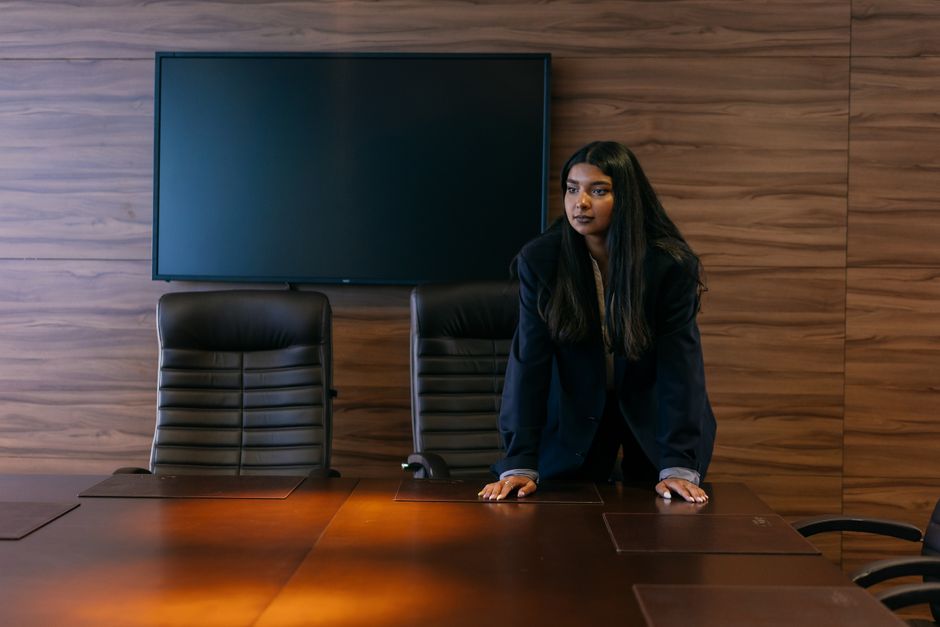
The Palmington‘s Conference Room is fully enclosed and air-conditioned independently, with controlled access to the space — the kind of operational envelope that removes these risk variables from the executive’s checklist before the session even begins.
What Does a C-Suite Meeting Room Requirements Checklist Look Like?
Board secretaries and executive assistants should use a structured audit framework when vetting any venue for confidential executive use. The table below maps the critical feature categories against why each matters operationally and how The Palmington addresses each requirement as the benchmark c-suite meeting space Lagos professionals reference.
| Feature Category | Why It Matters for C-Suite Use | The Palmington Standard |
|---|---|---|
| Acoustic Isolation | Prevents sensitive financial, legal, or HR discussions from being heard in adjacent spaces. Critical during merger talks, board resolutions, or disciplinary hearings. | Fully enclosed, dedicated conference room with independent air-conditioning — no shared ceiling voids or partition walls connecting to adjacent activity areas. |
| Visual Privacy | Protects slide decks, whiteboards, and participant identities from corridor visibility. Glass walls without blinds are a compliance risk for listed companies. | Opaque room envelope with no external glass frontage exposing the interior to common areas or external sightlines. |
| Controlled Access | Limits who can enter the building and approach the meeting room during a live session. Shared venues with concurrent events create uncontrolled foot traffic risks. | Boutique venue model with limited simultaneous event hosting — the attendee group is the only active occupant of the immediate space. |
| Presentation Screen & AV | Executives presenting investor decks, financial dashboards, or due diligence documents require a large, high-resolution display with reliable connectivity — no projector lag or HDMI adapter hunts. | Built-in large presentation screen inside the 20-person Conference Room, ready for immediate use without technician dependency. |
| Internet Reliability | Shared Wi-Fi networks in hotels and co-working hubs create bandwidth contention and security vulnerabilities. A video call dropping during a board resolution vote is operationally unacceptable. | Dedicated, non-shared fiber internet infrastructure — the connection is not pooled with other guests or tenants, a core differentiator of The Palmington’s infrastructure. |
| Backup Power | NEPA outages in Lagos are a documented operational reality, not an edge case. A venue without generator backup will terminate a live session mid-discussion. | Stable power infrastructure supporting uninterrupted air-conditioning, AV, and connectivity throughout full-day and half-day bookings. |
| Catering Discretion | Repeated staff entry to serve refreshments interrupts flow and creates privacy exposure. A self-contained refreshment point eliminates this disruption pattern. | Self-contained tea/coffee area inside the Conference Room — attendees manage refreshments without requiring repeated external staff access during sensitive discussions. |
| Location Discretion | Venue location affects who might observe executive arrivals, particularly for M&A discussions or investor meetings where anonymity of participation matters. | Located on a quiet close off Meadow Hall Way, Ikate, Lekki — away from high-traffic commercial strips, with low ambient footfall at the building entrance. |

What Are the Red Flags When Vetting Executive Meeting Spaces in Lagos?
Venue marketing materials rarely disclose the operational vulnerabilities that only surface during a live high-stakes session. Below are the deal-breakers that board secretaries and executive assistants should identify and disqualify before a deposit is ever transferred.
- Shared Wi-Fi networks: Any venue where your session runs on the same internet connection as hotel guests, co-working drop-ins, or restaurant patrons introduces bandwidth contention and network-level security exposure. For sessions involving financial data or legal documents, a shared network is a disqualifying condition — not a minor inconvenience.
- Glass-walled rooms without opaque blinds or frosted film: A glass-fronted boardroom may photograph well in a venue brochure, but it exposes your whiteboard, presentation screen, and attendee identities to corridor traffic in real time. This is a compliance risk for companies subject to disclosure regulations.
- No certified backup power: Lagos executives understand that NEPA supply cannot be relied upon as primary power for a critical meeting. A venue that operates on mains power without generator backup will drop your session the moment supply fails. Always confirm generator capacity covers AV, air-conditioning, and lighting simultaneously.
- Lobby-level or open-plan room positioning: A meeting room that sits adjacent to a reception lobby, shared waiting area, or open co-working floor cannot offer acoustic or visual separation. Attendee arrivals, departures, and the meeting itself become observable to non-participants.
- Concurrent event hosting with uncontrolled corridors: Venues running multiple simultaneous events — training sessions, launches, social functions — cannot guarantee the quiet access control that C-suite discussions require. The moment an unrelated group is moving through your building zone, privacy is compromised.
- No self-contained refreshment provision: Venues that require catering staff to enter the room repeatedly for tea, coffee, or water service create a predictable pattern of interruption and privacy exposure. A session on a sensitive agenda — redundancy planning, acquisition terms, board member performance — should never be paused for a server to collect empty cups.
- Ambiguous seating capacity relative to your group size: A room rated for 20 persons that actually seats 20 in cramped theatre rows is not the same as a room with a proper conference table at that count. Verify that the quoted capacity assumes the layout you actually need — boardroom configuration, not maximum occupancy.
How Much Does a Private Boardroom Cost in Lagos, and How Are Sessions Structured?
Pricing for executive meeting space in Lagos varies significantly based on location tier, infrastructure quality, and exclusivity of access. Budget venues in mainland locations charge considerably less but typically deliver on none of the privacy or infrastructure requirements above. Premium island-side venues — particularly in Victoria Island and Lekki — command higher rates but span a wide quality range that pricing alone does not resolve.
The more operationally useful framing for CFOs and executive assistants managing budgets is total cost of failure: a session that loses connectivity during a board vote, drops audio on a critical investor call, or is interrupted by an unrelated event in the same building carries costs that dwarf the marginal saving on a cheaper room rate.
When evaluating Lekki-tier executive venues, the key structural question is whether the booking is exclusive and time-defined. The Palmington‘s Conference Room operates on clear booking windows: Full Day (9:00 AM – 6:00 PM) or Half Day (9:00 AM – 12:00 PM or 2:00 PM – 6:00 PM). This structure gives board secretaries a defined session envelope for agenda planning, attendee scheduling, and Third Mainland Bridge-sensitive arrival logistics — a real variable for executives commuting from the mainland who need precise session start guarantees.
For Lekki-based corporates, proximity also eliminates the time erosion of VI traffic. An 8:30 AM departure from Lekki Phase One reaches Ikate comfortably; the same agenda scheduled for a VI hotel meeting room may require a 7:00 AM departure from the same origin point, depending on the day.

What AV Equipment Do Executives Need for Confidential Meetings?
The AV requirements for a C-suite session are distinct from those for a training class or product launch. The priority is reliability and simplicity over spectacle. An executive presenting a consolidated group financial statement to a board does not need theatrical lighting — they need a display that renders financial tables legibly at the far end of a 20-person table, a connection that does not require ten minutes of troubleshooting, and an internet pipe that sustains a multi-party video call without compression artifacts breaking the reading of a shared screen.
The minimum viable AV stack for a private board session includes: a large built-in presentation screen visible from all seated positions, a stable wired or dedicated wireless connection for screen mirroring, and reliable power to all of the above without dependence on mains supply. Rooms that rely on a portable projector introduced on the day of the meeting introduce a fragility point that experienced board secretaries have learned to eliminate from the checklist entirely.
The Palmington‘s Conference Room carries a built-in large presentation screen as standard equipment — not a rental add-on — supported by the venue’s dedicated, non-shared fiber internet infrastructure. For executives hosting hybrid board meetings where remote directors dial in via video conference, that dedicated connection is the difference between a functional session and an embarrassing technical failure in front of institutional investors.
One often-overlooked AV consideration in the Lagos context is air-conditioning noise interference. A system that cycles loudly enough to compete with a presenter’s voice creates fatigue over a full-day session and degrades audio quality for remote participants. Independent, quiet HVAC operation is as much an AV requirement as screen resolution.
How Do You Book a Private C-Suite Meeting Room in Lekki, Lagos?
The practical booking process for executive meeting space in Lagos typically runs through a board secretary, executive assistant, or office manager acting on behalf of the C-suite principal. The key logistical steps are: confirming room capacity and layout against the expected attendee count, verifying power and internet infrastructure standards, confirming exclusive access for the booked window, and securing the booking in writing before communicating the venue to attendees.
For confidential sessions, the recommendation is to limit venue confirmation details to confirmed attendees only, shared via direct message or WhatsApp to each individual rather than a group broadcast — a standard referral and communication pattern for Lagos executive circles that reduces the risk of unintended disclosure of the meeting’s existence before it occurs.
The Palmington accepts bookings for both full-day and half-day conference room sessions. To confirm availability, discuss your session requirements, or receive a formal quote for a private c-suite meeting space Lagos executives rely on, contact The Palmington directly via the enquiry form at thepalmington.com/contact — the team responds promptly and can hold provisional availability while internal approvals are completed.
Frequently Asked Questions
Most functional board-level sessions require a room configured for between eight and 20 persons around a proper conference table. The Palmington’s Conference Room seats exactly 20 in a boardroom layout — sufficient for a full executive committee including legal, finance, and HR representation without crowding.
Yes — for any session involving video conferencing, screen sharing, or real-time document access, a shared hotel or co-working Wi-Fi network introduces bandwidth contention and security exposure. A dedicated, non-shared fiber connection, as provided at The Palmington, is the operational standard for confidential C-suite sessions.
For executives based in Lekki, Ajah, or Chevron corridors, a Lekki venue eliminates the Ozumba Mbadiwe and Adeola Odeku traffic variables entirely. Ikate, where The Palmington is located, is reachable without crossing the Third Mainland Bridge — a meaningful operational advantage for time-sensitive board sessions.
The Palmington’s Conference Room offers two structured options: a Full Day running 9:00 AM – 6:00 PM, or a Half Day in either the morning slot (9:00 AM – 12:00 PM) or afternoon slot (2:00 PM – 6:00 PM). Both options include access to the self-contained tea/coffee area and AV equipment.