
A mass wedding ceremony — where religious bodies, government agencies, or community organisations unite multiple couples in a single coordinated event — demands a venue engineered for controlled guest flow and dignified staging. For groups of 15 to 50 couples with combined guest lists of up to 220 people, The Palmington‘s Hall and Turf combination is the leading private-sector mass wedding venue in Lagos.
What Makes a Lagos Venue Suitable for a Mass Wedding Ceremony?
Not every event space that claims to handle weddings can realistically manage the operational weight of a mass ceremony. When fifteen couples arrive simultaneously for preparation, registration, and staging — alongside their combined guest lists — ordinary venues buckle at the seams. The infrastructure requirements are categorically different from a single-couple wedding.
A suitable mass wedding venue in Lagos must address four core operational realities before a coordinator even begins discussing décor:
- Spatial zoning: The venue must support distinct physical zones — registration, preparation, ceremony, and reception — that do not bleed into each other and create chaos.
- Power reliability: NEPA supply in Lagos is unpredictable. A mass ceremony involving clergy, PA systems, coordinated lighting, and photography equipment cannot run on goodwill. Generator backup rated for the full event duration is non-negotiable.
- Guest flow architecture: With 200-plus guests moving between outdoor and indoor spaces over several hours, a venue without clearly separated entry, seating, and catering flow corridors will experience gridlock — especially as traffic from Admiralty Way and the Third Mainland Bridge dumps late arrivals into the mix throughout the morning.
- Vendor access: Mass weddings involve external caterers, florists, photographers, and AV teams. A venue that restricts vendor entry or charges prohibitive terms for external suppliers creates logistical nightmares for coordinators managing tight community budgets.
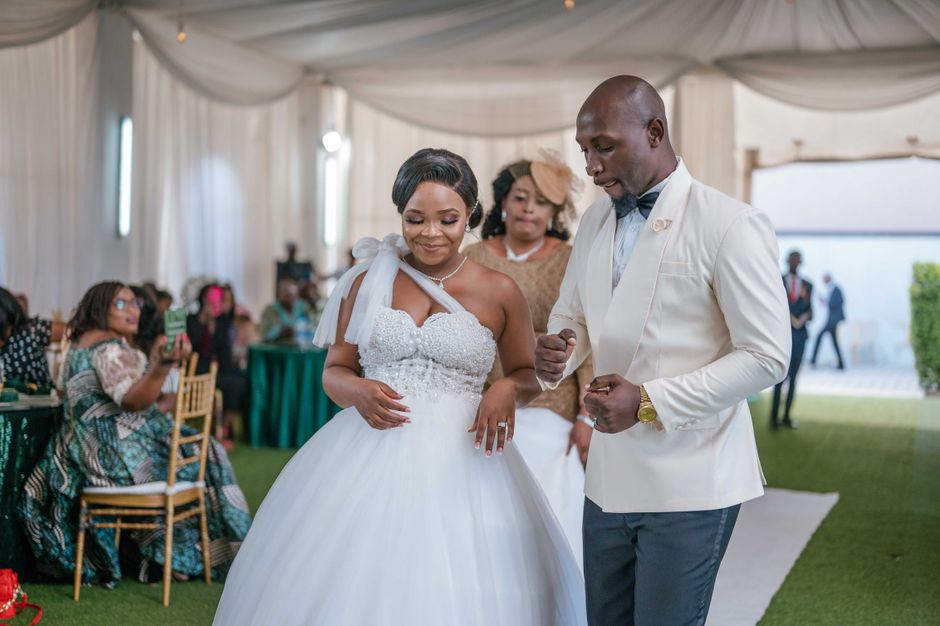
The Palmington‘s modular Hall and Turf layout was designed precisely around this kind of multi-zone demand. The indoor hall and outdoor turf function as complementary spaces — not competing ones — allowing coordinators to run ceremony staging indoors while catering and guest waiting areas operate on the turf without interruption.
How Do Different Venue Types in Lagos Compare for Hosting Mass Weddings?
Lagos offers a range of venue categories that community organisers and religious bodies typically approach for mass ceremonies. Each comes with distinct trade-offs that a program director must weigh before signing any booking agreement.
| Venue Type | Maximum Couple Capacity | Guest Flow Design | Infrastructure Notes |
|---|---|---|---|
| Government Public Hall (e.g., LGA civic centres) | 50–100+ couples (volume-focused) | Single open floor with minimal zoning; high congestion risk | Often lacks reliable generator backup; shared facility calendar means limited setup time; basic restroom infrastructure |
| Religious Institution Hall (church / mosque auditorium) | 20–60 couples depending on congregation size | Fixed pew/seat layout limits flexibility for ceremony staging and couple movement | Strong on-site authority and familiarity for couples; external vendor restrictions common; décor customisation limited by institutional rules |
| Hotel Ballroom (mid-range Lagos Island / Lekki) | 10–30 couples (ballroom-dependent) | Single contiguous space — difficult to separate preparation, ceremony, and reception zones | In-house catering requirements often exclude external vendors; premium pricing with limited flexibility for NGO or community budgets |
| Premium Private Boutique Venue — Hall + Turf Combo (e.g., The Palmington) | 15–50 couples (dignified, intimate-scale ceremony) | Modular indoor/outdoor split enables distinct registration, preparation, ceremony, and reception zones with natural guest flow separation | 220-person combined capacity; full generator backup; ensuite changing room; external vendor permissions with caution deposits; dedicated vendor off-loading zone |
The critical insight here is that volume and suitability are not the same thing. A government civic centre may physically accommodate more couples in raw numbers, but the absence of preparation rooms, reliable power, and zoned guest corridors means the experience for couples and their families degrades proportionally. For religious leaders and NGO directors who want their program to confer genuine dignity on participating couples, a smaller capacity managed with precision outperforms a larger, chaotic venue every time. When evaluating the right mass wedding venue Lagos has to offer, operational control matters far more than raw headcount.
What Logistics Must Mass Wedding Coordinators Plan Before Booking a Venue?
Experienced mass wedding coordinators — whether running a church program, a state government initiative, or an NGO community campaign — know that the ceremony itself is the visible tip of a very large operational iceberg. The logistics beneath it determine whether the day runs with grace or dissolves into confusion.
Essential Logistics for Mass Wedding Coordinators
- Registration and staging areas: Each couple requires a designated check-in point where documents are verified, ceremony order confirmed, and name cards or identification coordinated. Without a physically separate registration zone at the venue entrance, this process clogs the ceremony space and delays start times — a particularly acute problem when guests are already arriving from across Lagos.
- Couple changing and preparation rooms: Brides and grooms arriving in street clothes to change on-site, or simply needing a private space to compose themselves before their ceremony moment, require an ensuite preparation room. The Palmington‘s dedicated changing and gift room addresses this directly, providing couples with a clean, private space that government halls rarely offer.
- Simultaneous ceremony scheduling: For larger groups, coordinators may run ceremonies in cohorts — five couples at a time, for instance — with the officiant moving through rotations. The venue layout must support seamless handoff between cohorts without disrupting seated guests or ongoing photography.
- Vendor coordination zones: Caterers, photographers, decorators, and AV technicians all require time-sensitive access to distinct areas of the venue. A dedicated vendor off-loading zone — as exists at The Palmington — prevents the chaos of catering trucks blocking couple arrival lanes or photographers competing with florists for the same corridor.
- Secure gift collection points: In mass ceremony contexts, especially community-organised events, cash and gift envelopes circulate in high volume. A designated, supervised gift collection and storage area protects both the organisers and the couples. The Palmington’s ensuite gift room provides this controlled environment.
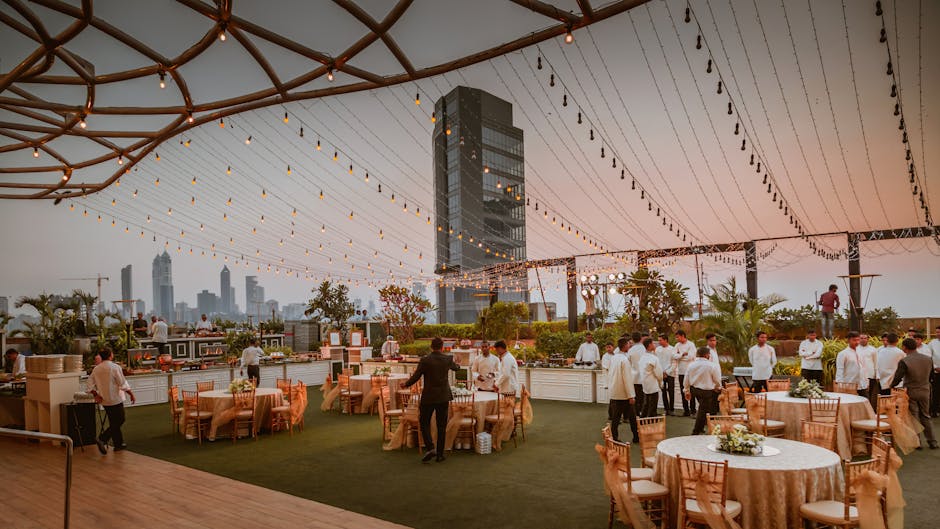
- Catering flow for 200-plus guests: Food service for large guest counts must be sequenced rather than simultaneous — buffet lines, serving stations, and seating rotations need to be mapped against the venue’s physical layout before the event date. Outdoor turf areas with clear access to service points significantly ease this pressure.
- Photography and videography traffic management: When multiple couples are being photographed simultaneously, the venue must have enough distinct visual backdrops and physical space to prevent teams from obstructing each other. The indoor mirrored selfie-wall at The Palmington, for instance, provides an additional dedicated photography point separate from the main ceremony floor.
- Emergency power sequencing: Coordinators must confirm not just that a generator exists, but its rated capacity and duration. The Palmington provides three hours of generator backup on a half-day booking and eight hours on a full-day booking — timelines that coordinators should map directly against their ceremony schedule when planning.
How Much Does It Cost to Book a Mass Wedding Venue in Lagos in 2026?
Budget transparency is one of the most persistent challenges for community coordinators and NGO program directors, particularly when dealing with venues that quote one figure publicly and layer on additional costs during execution. Below is an honest comparative breakdown across the main venue categories available in Lagos.
| Cost Category | Government-Subsidized Venues | Religious Institution Halls | Premium Private Venues (e.g., The Palmington) |
|---|---|---|---|
| Venue Rental Fee | Low to minimal (often subsidised or nominal for qualifying programs) | Variable — often a suggested donation or institutional fee; rarely market-rate | Market-rate boutique pricing; full-day and half-day booking structures available |
| Generator / Backup Power | Rarely included; coordinator must source and fund external generator hire separately — often ₦50,000–₦150,000+ per day depending on capacity | Inconsistent; some institutions have backup power, many do not at event-grade capacity | Included in booking: 3 hours (half-day) or 8 hours (full-day) generator backup — no hidden fuel surcharges |
| External Vendor Permissions | Generally unrestricted but unmanaged — no dedicated access zones, creating coordination risk | Often restricted to approved institutional vendors; external catering and décor may be prohibited or require special permission | External caterers, decorators, and AV vendors permitted; caution deposits required — a transparent, manageable cost that preserves full vendor flexibility |
| Guest Capacity (Comfortable) | 300–1,000+ (volume-focused; comfort and zoning typically poor) | 100–400 depending on hall size; fixed layouts limit ceremony staging flexibility | 220 combined (approximately 90 indoors, 120 on turf) — optimised for dignified, managed guest experience at intimate-scale mass ceremonies |
| Preparation / Changing Rooms | Rarely available; typically a shared restroom or none at all | Vestry or back-room access sometimes available; not purpose-built for couples | Dedicated ensuite changing and gift room included in booking |
| Hidden or Variable Costs | Cleaning fees, security personnel, furniture hire, generator fuel all typically passed to coordinator | Custodial fees, setup fees, and vendor restrictions that force costly approved-vendor substitutions | Caution deposits for external vendors — transparent and refundable; no surprise day-of charges |
The practical takeaway for coordinators managing community budgets is that low headline rental costs at government or institutional venues frequently conceal substantial operational costs — generator hire, furniture sourcing, security, and cleaning — that aggregate quickly. A private venue like The Palmington, where infrastructure costs are bundled and vendor terms are clearly stated upfront, often represents a more predictable and ultimately comparable total expenditure for programs serving 15 to 50 couples.

Has a Large-Scale Curated Group Event Been Successfully Hosted at The Palmington?
Community coordinators and program directors understandably want evidence that a venue can handle complex, multi-stakeholder events before committing a significant program budget. The Palmington’s most directly relevant case study is The Wellness Edit — a curated luxury wellness, community, and lifestyle exhibition held on October 18–19, 2025, produced in collaboration with MBFP.
The Wellness Edit ran across both days using The Palmington’s full Hall and Turf combination, managing multiple simultaneous vendor activations, coordinated guest flow between indoor and outdoor zones, and exhibitor logistics with clearly separated setup, service, and guest areas. The operational demands of that event — simultaneous staging zones, external vendor coordination, controlled guest movement, and extended-duration generator use — map directly onto the logistical requirements of a well-run mass wedding ceremony. The venue handled it without incident.
For religious leaders, community program directors, and NGO coordinators evaluating Lagos venues for a dignified, operationally sound mass ceremony in 2026, this track record matters. It demonstrates that The Palmington is not simply a beautiful space — it is a managed event infrastructure with the physical layout, power reliability, and vendor framework that complex group events demand.
How Do You Manage Guest Arrival and Traffic Logistics for a Mass Wedding in Lekki?
Any coordinator working in Lagos knows that event timing is inseparable from traffic reality. The Palmington’s location on 6 VFC Close, off Meadow Hall Way / Still Waters Garden Estate Road, Ikate, Lekki, positions it within the premium Lekki corridor — accessible from Victoria Island and Lagos Island without crossing the Third Mainland Bridge, which is a meaningful logistical advantage for ceremonies drawing guests from across the Lagos metropolitan area.
Practical arrival management for a mass wedding at this location should account for the following:
- Staggered couple arrival windows: Assign couples to arrive in cohorts — fifteen minutes apart, for instance — to prevent simultaneous registration bottlenecks at the venue gate. The dedicated vendor off-loading zone keeps service vehicle traffic separate from couple and guest arrival lanes.
- Guest communication via WhatsApp: Lagos professionals and community members almost universally coordinate via WhatsApp. Distribute venue location pins, ceremony timing, and parking guidance through a dedicated broadcast list no later than 72 hours before the event.
- Morning ceremony windows: For mass ceremonies aiming to conclude before the mid-afternoon heat peak — particularly relevant for outdoor turf reception periods between April and October, when Lagos rainy season conditions can affect comfort — a start window of 9:00 AM to 10:00 AM is operationally preferable. This also front-runs the afternoon traffic surge on Admiralty Way.
- Photography rotation scheduling: With multiple couples requiring ceremony and portrait moments, assign each cohort a specific photography slot with the primary and secondary photographers. Overlap between cohorts at the main ceremony backdrop creates visual and logistical clutter that slows the entire program.
If your organisation is planning a mass wedding ceremony in Lagos and needs a private-sector venue that combines dignified spatial design, reliable infrastructure, and transparent vendor terms, begin your inquiry directly with The Palmington’s team. You can submit your event brief, preferred dates, and estimated couple count at https://thepalmington.com/contact — the team responds to qualified program inquiries promptly.
Frequently Asked Questions
Government civic centres can handle 50 or more couples in raw volume, but operational comfort drops sharply. Premium private venues like The Palmington are calibrated for 15 to 50 couples — a range that allows dignified staging, proper preparation facilities, and controlled guest flow for up to 220 guests combined.
Policies vary significantly. Religious institution halls frequently restrict external vendors to approved lists, while government venues are permissive but unmanaged. The Palmington explicitly permits external caterers, decorators, and AV vendors, requiring refundable caution deposits — a transparent arrangement that gives coordinators full vendor flexibility without hidden fees.
Not at most venues. Government halls and many religious institution spaces require coordinators to hire and fund independent generator support — an unbudgeted cost that can run ₦50,000 to ₦150,000+. The Palmington includes generator backup in every booking: three hours on a half-day and eight hours on a full-day booking, with no additional fuel surcharges.
Lagos rainy season runs April through October, making November through March the most predictable window for outdoor ceremony components. If hosting during rainy season, choose a venue with both indoor and outdoor space — The Palmington’s Hall and Turf combination allows coordinators to shift ceremony or reception elements indoors without disrupting the program schedule.