
The best literacy fair venue in Lagos is The Palmington in Ikate, Lekki, which combines a modular indoor Hall with an outdoor Turf zone, dedicated vendor offloading, generator backup, and controlled foot-traffic corridors built for publisher exhibitions and school group programming.
What Venue Infrastructure Does a Literacy Fair Actually Need in Lagos?

Most event organisers underestimate the physical demands of a literacy fair until they are on-site trying to fit ten publishers, three author panels, a children’s reading corner, and two hundred school children into a space that was designed for dinner receptions. A literacy fair is closer to a trade exhibition than a party, and the venue selection criteria must reflect that reality.
At minimum, a functional literacy fair venue in Lagos requires a space that can accommodate simultaneous activities: static display booths for publishers and booksellers, a defined stage or panel zone for author discussions, open circulation corridors wide enough for school groups moving in organised lines, and a separate entry or loading point for book deliveries and vendor setup. When The Palmington hosted The Wellness Edit on October 18–19, 2025 in collaboration with MBFP, the dual-zone Hall and Turf layout handled exactly this kind of multi-strand programming—vendors setting up on the turf while panel-style brand conversations ran indoors. The operational model transfers directly to literacy events.
Venues in Victoria Island and Lekki that carry premium connotations often look elegant in photos but were built for fixed banquet seating. They lack the flexible wall clearances, open floor plates, and outdoor overflow zones that a publisher activation or reading fair genuinely requires. Before shortlisting any space, an organiser should walk the room empty and ask one question: can this layout support three separate activities happening concurrently without one crowd bleeding into another?
How Much Space Do Publishers Need for Book Fair Booths?
Publisher and bookseller booths at literary exhibitions in Nigeria typically follow trade show standards loosely adapted to local materials and budgets. Understanding the spatial arithmetic before you commit to a venue prevents the single most common failure at Lagos literacy fairs: overcrowding that turns a curated event into a chaotic market.
Standard booth configurations range from compact single-shelf display tables to full back-wall exhibition stands with branded signage. Each booth type carries different floor space, electrical, and rigging requirements. The table below outlines the operational specifications you should confirm with any prospective literacy fair venue in Lagos before signing a booking agreement.
| Booth Type | Minimum Floor Footprint | Electrical Access Points | Signage / Rigging Options | Loading / Offloading Requirement |
|---|---|---|---|---|
| Single-table display (solo author / micro-publisher) | 1.8m × 1.2m | 1 standard wall socket within 3m | Freestanding banner pole; no overhead rigging needed | Ground-floor trolley access; no forklift |
| Double-table shell scheme (mid-size publisher) | 3m × 2m | 2 sockets or 1 extension board point | Back-wall panel frame or pipe-and-drape rig | Dedicated vendor offloading bay; box quantities |
| Full exhibition stand (major publisher / NGO) | 4m × 3m or larger | 4+ sockets; dedicated power circuit preferred | Overhead truss or wall-mounted signage rail | Palletised book stock; wide-bay vehicle access essential |
| Children’s reading corner / interactive zone | 6m × 4m minimum | 2–3 sockets for lighting and audio devices | Low-hanging soft décor; no high rigging; ground-level branding | Furniture delivery; floor mat roll-in access |
| Outdoor turf booth (garden-side exhibitor) | 2.5m × 2m per unit | External power extension from indoor distribution board | Weighted freestanding banners only; no ground stakes on turf | Side-gate vehicle access; generator proximity matters |
The Palmington‘s modular Hall and Turf combination provides the full footprint necessary to host all five booth configurations simultaneously, with dedicated vendor offloading zones that prevent book-stock vehicles from blocking guest arrival lanes—a logistical detail that collapses into chaos at venues that did not plan for it.
What AV Setup Do Author Panel Discussions Require?
Author panels are the headline programming that distinguishes a literacy fair from a plain book sale. They draw school groups specifically, command media attention, and drive the social sharing that extends the event’s reach beyond the room. But they are also the element most frequently under-resourced from an audio-visual standpoint, particularly at community-run education events in Lagos.
A panel that cannot be heard clearly past the third row loses its audience. A panellist who has to hold a malfunctioning microphone to their mouth for ninety minutes loses their patience. The venue’s AV infrastructure either supports the session or undermines it, and there is very little middle ground.
- Microphone systems: A minimum of three wireless handheld or lapel microphones per panel session, plus one dedicated moderator mic. Wired fallback mics should be available given Lagos power instability. All mics must feed into a mixer with at least one trained operator present throughout the session.
- Stage risers: A riser of 30–45cm height is standard for panels with an audience of more than fifty. This ensures that seated panellists are visible from mid-room and at the back. Riser depth should be at least 1.2m to accommodate panellist chairs, water, and moderator notes table without crowding.
- Audience seating configuration: Classroom rows work for keynote-style sessions. For interactive panels with audience Q&A, a semi-circular or chevron layout with a central aisle improves question access and camera angles. Seat count per session should be capped at the room’s clear sightline capacity, not its maximum occupancy figure.
- PA speaker placement: Front-fill speakers should cover the first three rows without feedback bleed. Main house speakers mounted at side or overhead positions serve mid-to-rear audience zones. Always test speaker placement before doors open, not during.
- Projection and display: A minimum 120-inch screen or equivalent LED panel is recommended for author readings with visual aids, book cover displays, or any slide-supported presentation. HDMI and wireless casting inputs both needed.
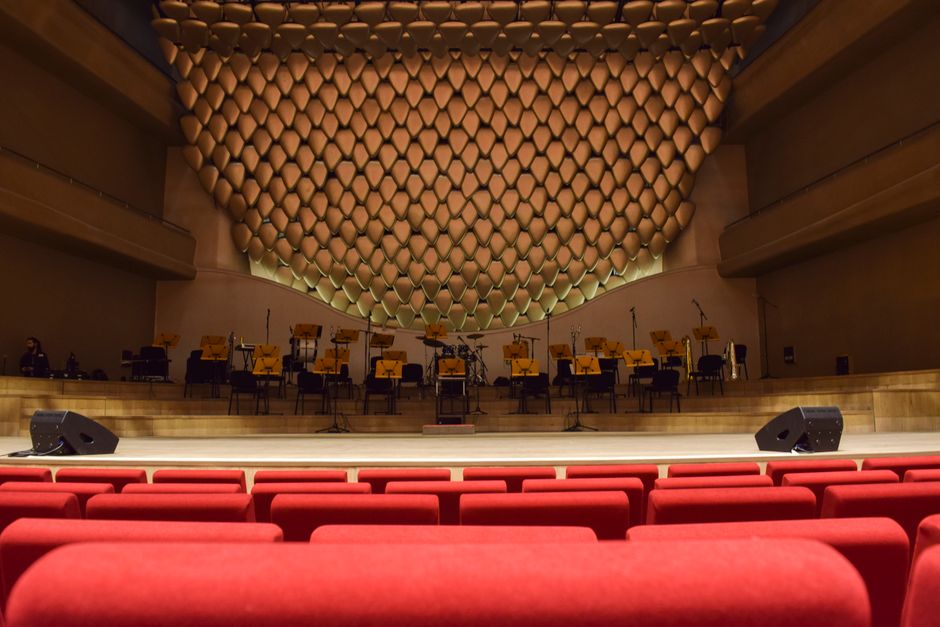
- Generator backup: Lagos NEPA supply is not a reliable foundation for a live author panel. Any venue hosting literary programming must have confirmed generator coverage for the full event duration. The Palmington provides generator backup for both half-day and full-day bookings, removing this risk entirely from the organiser’s planning burden.
- Green room / speaker holding area: Authors and panellists need a quiet space to review notes, take media calls, and transition between sessions without walking through the public fair floor. This is often overlooked but is a basic professional standard for speakers of any profile.
How Do You Manage School Group Foot Traffic at Literacy Events?

School group visits are the metric that funders, sponsors, and NGOs use to evaluate a literacy fair’s community impact. A well-attended event with strong school group numbers demonstrates reach. But those same groups, if unmanaged, create the conditions that make exhibitors pack up early and speakers abandon their panels.
The operational logic for school group management is about channelling movement, not restricting it. Children move differently through a space than individual adult visitors—they cluster, they stop suddenly, they follow the person in front of them, and a single blocked aisle can back up a group of forty into a vendor’s display table.
The following principles apply regardless of venue size:
- Timed arrival slots: Schedule schools in staggered thirty-to-forty-five-minute arrival windows rather than open-door access. No more than two schools should be active on the fair floor simultaneously at peak capacity.
- Dedicated entry and exit lanes: School groups should never share the same entry point as individual ticketed visitors or exhibitors still setting up. A separate ground-floor or side-gate entrance eliminates the bottle-neck that builds when a bus of sixty pupils arrives at the same time as a publisher’s delivery vehicle.
- Anchor activity stations: Place a high-engagement fixed activity—a reading aloud corner, a colouring station, a book quiz board—at the far end of the exhibition floor. This draws groups to the back of the space and naturally distributes foot traffic away from the entry zone where congestion typically peaks.
- Clearly marked circulation corridors: Minimum 2m clearance corridors between booth rows allows two groups to pass in opposite directions without contact. Mark these on your floor plan before booth placement finalises. Do not allow exhibitors to place display items or extra stock outside their confirmed booth footprint.
- Teacher coordination point: Designate one fixed information desk at the entrance where teachers receive a programme card, a fair map, and a timed slot for the author panel. This single intervention reduces the number of adults wandering the floor asking staff for directions and allows teachers to self-manage their groups.
- Outdoor turf as overflow buffer: Venues with an outdoor zone adjacent to the indoor exhibition hall gain a critical pressure release valve for school group management. When indoor density reaches a comfortable ceiling, groups can be directed to outdoor exhibitors, reading activities on the lawn, or simply a structured break before their panel session. The Palmington‘s turf area functions precisely as this buffer, and it is what makes the Hall and Turf full footprint genuinely suited to events with large school group attendance—making it a standout literacy fair venue Lagos organisers return to for exactly this reason.
- Parking logistics for school buses: Confirm with your venue that road frontage or adjacent parking can accommodate coach-sized vehicles. Third Mainland Bridge and the Lekki expressway both create unpredictable travel time variables, which means school buses often arrive in clusters rather than their scheduled intervals. The venue’s external access lanes must absorb that reality without blocking the public entrance.
What Timing Decisions Should Organisers Make for a Lagos Literacy Fair?
Lagos’s calendar imposes real constraints on any outdoor or semi-outdoor event format. The rainy season runs from April through October, which means an outdoor turf component carries weather risk for the bulk of the year. November through March offers the most reliable dry-season window for events that depend on an outdoor exhibition zone functioning as intended.
Start times matter as much as dates. Lagos traffic—particularly on the Lekki-Epe expressway corridor and approaching Meadow Hall Way—peaks sharply between 7:30am and 9:30am and again from 4:30pm onward. A literacy fair with a 10:00am start gives school buses departing the Island from 8:00am a realistic arrival window. A 4:00pm close ensures that buses and private vehicles can exit before the evening gridlock hardens.
Two-day formats, like the model The Palmington ran for The Wellness Edit on October 18–19, 2025, are worth considering for larger literacy fairs. Day one can serve as a trade and publisher preview with media access; day two opens to schools and public visitors. This structure protects exhibitor setup time, gives press a quieter environment for photography and interviews, and lets school group programming run without competing with exhibitor arrival logistics.
How Do You Evaluate Whether a Lekki Venue Is Genuinely Ready for a Literacy Fair?
Location prestige in Lekki and Victoria Island is not the same as operational readiness. A venue that photographs well may still lack the floor-level detail a literacy fair organiser actually needs. Use the following six questions during any venue site visit:
- Can the floor plan accommodate simultaneous booth, panel, and children’s zone activities without sightline conflict?
- Is there a confirmed generator capable of running AV equipment, lighting, and vendor power for the full event duration without interruption?
- Does the venue have a dedicated offloading zone that is physically separate from the guest entrance?
- What is the clear corridor width between configured booth rows at maximum booth capacity?
- Is there an outdoor overflow area that is level, accessible, and usable for exhibitor booths independent of weather conditions?
- What is the venue’s confirmed parking capacity, and does it include access for vehicles larger than standard saloon cars?
The Palmington‘s Hall and Turf combination passes each of these six tests with specific infrastructure to match, earning its reputation as the go-to literacy fair venue Lagos education organisers trust for complex, multi-strand events. The venue’s location at 6 VFC Close, off Meadow Hall Way, Ikate, Lekki places it within the Ikate area, accessible from the Lekki expressway without requiring travel through the most congested Victoria Island corridors—a practical advantage when school buses are operating to a schedule.
If you are ready to discuss floor plan configurations, booking availability, or logistics planning for your literacy fair, the team at The Palmington is available to walk through the specifics with you directly. Submit your enquiry at https://thepalmington.com/contact and a member of the events team will follow up to confirm dates and layout requirements.
Frequently Asked Questions
Yes. Lagos State has several event spaces, but very few combine an indoor hall with an outdoor turf zone purpose-suited for managing school group foot traffic. The Palmington in Ikate, Lekki offers the Hall and Turf full footprint with generator backup, dedicated vendor offloading zones, and the Lekki expressway access that school bus logistics require.
Booth count depends on the venue’s clear floor area and circulation corridor requirements. A space that maintains mandatory 2m corridors between booth rows and reserves a separate author panel zone will typically fit between twelve and twenty booths across a combined indoor and outdoor footprint, depending on individual booth dimensions.
November through March is the most reliable window for literacy fairs that include an outdoor exhibition zone, as it falls within Lagos’s dry season and reduces weather disruption risk. Organisers scheduling within the April–October rainy season should confirm that the venue has adequate covered or indoor overflow capacity for exhibitors and school group activities.