
A successful relationship management offsite in Lekki requires three non-negotiables: executive-grade privacy, uninterrupted focus infrastructure, and professional AV. The Palmington‘s 20-seat Conference Room at Ikate, Lekki is the Lagos benchmark for confidential CRM strategy sessions — purpose-built, fiber-connected, and available for full or half-day bookings.
What Exactly Is a Relationship Management Offsite — and Why Does Location in Lekki Matter?
A relationship management offsite pulls key account managers, sales directors, or client-facing executives out of their daily office environment to do one thing: think clearly about the people and organisations that drive revenue. Away from ringing phones, walk-in colleagues, and open-plan noise, teams can audit client health scores, stress-test account strategies, and align on retention goals without interruption.
Location matters more than most teams admit. Lekki and Victoria Island carry a deliberate professional connotation in Lagos — clients and stakeholders interpret a well-chosen Lekki address as a signal of seriousness. More practically, Lekki-side venues eliminate the Third Mainland Bridge commute for most Island-based executives, reducing the risk of latecomers derailing a tightly scheduled agenda. A venue like The Palmington, situated at 6 VFC Close, off Meadow Hall Way, Ikate, Lekki, sits within easy reach of the major corporate corridors on the Island without the congestion penalty of heading deeper into the Mainland.
The other practical consideration is NEPA reliability. Power outages mid-session are a Lagos reality that no team should discover on the day. Any serious relationship management offsite Lekki venue must run on stable backup generation — a point every relationship manager should confirm during venue inspection, not after booking.

What Privacy Features Should a Relationship Management Venue Provide?
This is the question most teams underestimate when booking. CRM offsites involve sensitive data: client revenue figures, account vulnerability assessments, competitive positioning, and sometimes personnel decisions about key account teams. The room you sit in must protect that conversation at every level.
Here is what executive privacy actually means in a venue context:
- Dedicated, non-shared internet infrastructure: A shared hotel Wi-Fi or co-working router means your data traverses a network used by strangers. Dedicated fiber — the kind The Palmington provides exclusively to its meeting rooms — means your session traffic is isolated.
- Acoustic separation: Thin partition walls in a multi-tenant building defeat confidentiality. A purpose-built conference room with solid wall construction prevents adjacent room bleed.
- Controlled access: Reception areas where random visitors walk past your boardroom door are a privacy failure. Evaluate whether the venue controls who can enter the floor or corridor where your session runs.
- Non-public session scheduling: Quality venues do not display room booking names or company names on shared lobby screens. Your competitors should not know you are conducting a client strategy review.
- Exclusive room occupancy: You must be the only group in that specific room — not a hotelling arrangement where someone else uses it for the afternoon if you finish early.
- Whiteboard and presentation confidentiality: All session notes, slides, and whiteboard content should be yours to secure or erase before departure. Staff access during breaks should be agreed in advance.
What Does a Relationship Management Offsite Requirements Checklist Look Like?
| Requirement Category | Must-Have Features | Why It Matters |
|---|---|---|
| Privacy & Access Control | Dedicated room, controlled corridor access, non-public booking display | CRM data — client revenue, vulnerability scores, retention risk — is commercially sensitive. Exposure is a legal and reputational liability. |
| Internet Infrastructure | Dedicated (non-shared) fiber connection, minimum stable bandwidth for video calls and live CRM platforms | A dropped connection during a client data review or a live Salesforce/HubSpot session wastes expensive executive hours and signals poor preparation. |
| AV & Presentation Tech | Large presentation screen, HDMI/wireless casting, reliable in-room display without external technician dependency | Account reviews require side-by-side data comparison. A large, clear display eliminates the huddle-around-a-laptop problem that reduces focus and wastes time. |
| Seating & Space Configuration | Flexible layout (boardroom, U-shape, workshop rows), adequate table space per person for laptops and notebooks | CRM sessions move between plenary review, breakout discussion, and working group modes. Fixed theatre seating makes this impossible. |
| Climate Control | Consistent, independent air conditioning — not a central building system that varies by floor | Lagos heat is not a minor inconvenience in a full-day session. Executives disengage when physically uncomfortable. Cognitive performance drops measurably in poorly ventilated rooms. |
| Power Reliability | Stable generator backup with seamless switchover, surge-protected power points at the table | NEPA outages are a Lagos constant. A mid-session blackout that loses unsaved work or drops a client call is a preventable failure that reflects on the organiser’s judgment. |
| Catering Flexibility | In-room tea and coffee service, break catering that does not require leaving the building, lunch options that do not add a 45-minute commute | Every time a team physically leaves the venue, you lose 20–40 minutes of re-engagement. On-site refreshment keeps the session energy intact. |
| Booking Flexibility | Full-day and half-day booking options, clear start and end times | Not every CRM offsite needs eight hours. Half-day slots allow teams to run a focused morning session without paying for unused afternoon time. |
How Much Space Do You Need for a 15-Person CRM Offsite?
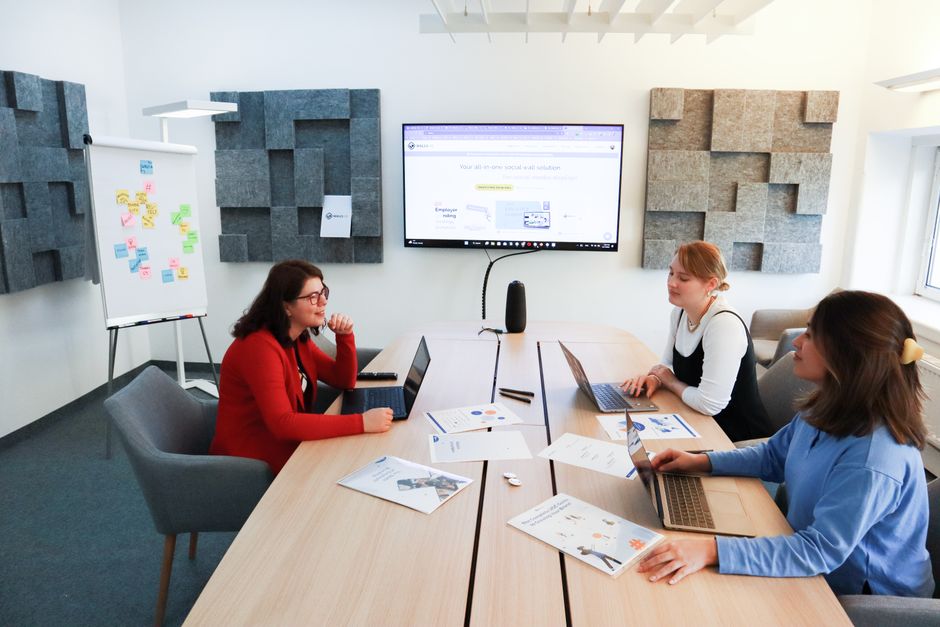
The practical answer is more nuanced than a headcount calculation. For a relationship management offsite, each participant typically needs table space for a laptop, a notepad, and a drink — plus enough elbow room to refer to printed account reports without stacking documents on a neighbour’s keyboard. A room designed for a specific headcount, rather than crammed to fire-code maximum, produces noticeably better session quality.
The Palmington‘s Conference Room is purpose-configured for exactly 20 persons, with a large conference table and flexible seating arrangements that accommodate boardroom round-table formats for full-group account reviews, as well as U-shape configurations that work for facilitated workshops. A team of 15 in a 20-seat room has the breathing space that produces better conversation — not the compressed discomfort of a venue oversold by five bodies.
For smaller CRM working groups — account teams of eight to ten reviewing a specific client segment — a room like The Palmington‘s Training Room (capped at 12 persons with specialised worktables) provides the focused, workshop-style environment that plenary boardrooms sometimes make feel too formal. The modular arrangement means the room can shift from a facilitated workshop layout to a paired working group configuration within minutes.
The general industry benchmark for productive executive working space is between 2.0 and 2.5 square metres per person in an active workshop setting. If a venue cannot confirm its usable per-person square footage, that is a signal to keep looking.
What AV Setup Works Best for Confidential Client Strategy Sessions?
CRM offsite sessions typically cycle through three distinct modes, and each has different AV demands:
- Data review mode: The team pulls up live CRM dashboards, account health reports, or revenue pipeline data. This requires a large, sharp display that the full group can read from their seats without standing. A small monitor placed at one end of a long table fails this test. The Palmington’s Conference Room features a presentation screen scaled for a 20-person room — every seat has a usable sightline.
- Presentation mode: A facilitator or account lead walks the group through a structured account review or retention strategy deck. HDMI connectivity and ideally wireless casting (so presenters are not tethered to a specific seat) are the standard requirements. Confirm before you book whether adapters for USB-C and Mac connectivity are available in the room, or whether you need to bring your own.
- Remote stakeholder inclusion mode: Increasingly, CRM offsites include a regional director or a key client contact joining by video for a segment of the session. This requires a reliable video conferencing setup — camera angle that captures the room, clear audio pickup, and the stable fiber connection that prevents the freeze-frame humiliation of a dropped call with a Tier 1 client.
The non-negotiable underneath all three modes is internet reliability. A hotel venue sharing bandwidth across 200 rooms will not deliver consistent performance during peak business hours. The Palmington‘s dedicated, non-shared fiber infrastructure is the specific differentiator that makes the difference between a smooth technical session and one that loses 40 minutes to connectivity troubleshooting.
One practical AV preparation tip: always conduct a 10-minute technical check at the start of a session rather than assuming everything works. Confirm screen mirroring, test audio levels for any remote participants, and verify that the room’s power points are accessible from every presenter position. These four minutes prevent four wasted hours.

How Should You Structure the Agenda for a Full-Day Relationship Management Offsite?
Structure is the variable that separates an offsite that produces decisions from one that produces a long conversation. The following framework applies to most CRM strategy offsites regardless of industry:
- Morning block (9:00 AM – 12:00 PM): Diagnosis. Review current client portfolio health. Segment accounts by growth potential, retention risk, and strategic value. This block should be data-driven and facilitated — not a series of unstructured opinions. End with a ranked list of accounts requiring action.
- Midday break (12:00 PM – 1:00 PM): Working lunch. Keep the team in the building. A working lunch that stays on-premises maintains session energy and allows informal discussion to continue. Confirm catering logistics with your venue coordinator in advance — The Palmington‘s self-contained setup supports in-room refreshment throughout the day.
- Early afternoon block (1:00 PM – 3:30 PM): Strategy development. For the top-priority accounts identified in the morning, build specific action plans. Assign owners, define next steps, and agree on communication strategies. This is the session’s highest-value work — protect it from interruption.
- Late afternoon block (3:30 PM – 5:30 PM): Execution planning. Translate strategy into calendar-level commitments. Who contacts which client, by what date, with what specific objective? Document decisions in real-time so you leave the room with a live action register rather than notes that need to be processed next week.
- Close (5:30 PM – 6:00 PM): Recap and accountability. Each participant states their top three commitments aloud. This creates social accountability that email follow-ups rarely replicate.
The Palmington’s Conference Room Full Day booking runs 9:00 AM – 6:00 PM — exactly the window this framework requires. For teams that need only the diagnosis and strategy blocks, the Half Day option (9:00 AM – 12:00 PM) is a legitimate alternative that keeps costs proportionate to scope.
Which Lekki Executive Venue Evaluation Criteria Should You Apply Before Booking?
Lagos has no shortage of venues that describe themselves as executive. The following criteria give relationship managers a concrete filter to apply when evaluating any relationship management offsite Lekki option — during venue research and site visits:
- Privacy protocols: Ask specifically whether the venue has a policy on who can access the floor during your session, whether your booking name appears on any public display, and whether there is a dedicated point of contact who manages your room — not a shared front desk managing multiple event floors simultaneously.
- Fiber internet reliability: Request confirmation that the internet is dedicated infrastructure, not shared building Wi-Fi. Ask for a speed test result or arrange a site visit to test connectivity during business hours. The Palmington’s dedicated fiber is the benchmark to hold other venues against.
- Catering flexibility: Confirm whether the venue allows external catering, has in-house options, or provides a self-contained refreshment setup. A venue that forces you to exit the building for lunch adds logistical friction and consumes valuable session time.
- Secure access control: Evaluate whether the building has controlled entry — a reception gate, security personnel, or a visitor registration system. An open-access building where anyone can walk up to your conference room door is a privacy failure, regardless of how attractive the interior looks.
- Generator and power stability: Ask directly: does the venue have a dedicated generator, and how long is the switchover time when NEPA drops? Anything over 30 seconds risks disrupting a live presentation or dropping a video call.
- Seating capacity accuracy: Confirm rated capacity versus comfortable working capacity. A room rated for 20 persons at a conference table is meaningfully different from a room with 20 chairs arranged in theatre rows. Specify your seating configuration requirement before you pay a deposit.
- Booking time precision: Confirm exact start and end times, what happens if a previous booking overruns, and whether setup time is included within your booked window or charged separately.
- Location accessibility: A Lekki-axis venue eliminates the Third Mainland Bridge variable for Island-based executives. Confirm parking availability and proximity to the Lekki-Epe Expressway corridor for participants coming from further east.
Running this checklist across two or three shortlisted venues before committing takes less than 90 minutes of phone calls and site visits. It eliminates the far costlier discovery that a venue does not meet your requirements on the day of the session itself.
Ready to secure a venue that meets every one of these criteria? The Palmington‘s Conference Room — 20 seats, dedicated fiber, full-day booking from 9:00 AM – 6:00 PM, and built specifically for confidential executive sessions — is Lekki’s most complete relationship management offsite solution. Contact the team directly at https://thepalmington.com/contact to check availability, discuss your session requirements, and arrange a site visit.
Frequently Asked Questions
For most CRM teams of 10 to 20 people, a purpose-configured boardroom with a dedicated conference table is the right format. The Palmington’s Conference Room holds exactly 20 persons with flexible seating layouts, providing enough space for productive account review sessions without the impersonal scale of a hotel ballroom.
Choose a venue with dedicated (non-shared) internet infrastructure, controlled building access, and no public display of your booking details. Confirm acoustic separation from adjacent rooms and establish a clear agreement on staff access during breaks. These four measures protect commercially sensitive CRM data from accidental or deliberate exposure.
A full-day booking typically runs 9:00 AM – 6:00 PM and suits complete CRM strategy sessions covering diagnosis, planning, and execution. A half-day slot — either 9:00 AM – 12:00 PM or 2:00 PM – 6:00 PM — works for focused account reviews or follow-up workshops where the full agenda does not require an all-day commitment.
CRM platforms, live dashboards, and video calls with remote stakeholders all depend on consistent bandwidth. Shared hotel or co-working Wi-Fi degrades under simultaneous load from other users — often precisely during peak business hours when your session is running. Dedicated fiber, as provided at The Palmington, isolates your session traffic and eliminates that risk entirely.