
The best venue for a bridal fashion pop-up in Lagos is The Palmington in Ikate, Lekki—offering modular Hall and Turf configuration, dedicated generator backup, climate-controlled garment storage, and controlled perimeter access for up to 220 guests.
How Much Space Do You Actually Need for a Multi-Booth Bridal Fashion Pop-Up?
Space allocation is the single most critical logistical variable in any bridal fashion pop-up in Lagos. Underspacing leads to crowd bottlenecks; overspacing dilutes the curated atmosphere that drives purchase intent. Industry standard for fashion retail pop-ups sets a minimum of 9–12 square metres per vendor booth when you factor in the booth frame, garment racks, a fitting zone, and a display table.
For a 10-booth showcase, you need a clear floor area of at least 120 square metres, excluding circulation corridors. Circulation corridors must be a minimum of 1.5 metres wide on primary guest pathways and 1 metre wide on secondary access routes to comply with basic safety egress standards. For a 20-booth showcase, your usable floor area requirement rises to approximately 280–320 square metres when you account for a dedicated reception zone, a photography station, and a central gathering space for any live demonstrations or styling sessions.
The Palmington operates on a modular Hall and Turf footprint that allows organizers to configure indoor and outdoor zones independently or as a combined exhibition floor. This means booth counts and spatial arrangements can be recalibrated without structural constraints—a critical operational advantage when your vendor roster changes between the first and final confirmation, as it often does on Lagos timelines.

What Are the Power Requirements Fashion Vendors Need at a Bridal Pop-Up?
Electrical load management is where most Lagos event organizers underestimate risk. A bridal fashion pop-up concentrates several high-draw appliances into a single venue simultaneously: professional LED track lighting rigs, industrial steam presses, garment steamers, POS terminals, ring lights for content creation, portable fans for guest comfort, and potentially a live DJ or background audio system.
Here is a reference load table for common bridal pop-up electrical requirements:
| Equipment Type | Approximate Draw Per Unit | Typical Quantity (20-booth event) | Estimated Total Load |
|---|---|---|---|
| Garment steamer | 1,500–2,000W | 8–12 units | 12–24 kW |
| LED track lighting rig (per booth) | 200–400W | 20 rigs | 4–8 kW |
| Ring light / content lighting | 50–75W | 20 units | 1–1.5 kW |
| POS / card terminals | 15–30W | 20 units | 0.3–0.6 kW |
| Audio system (PA or DJ) | 500–2,000W | 1 system | 0.5–2 kW |
| Air conditioning units | 1,500–3,000W per unit | Venue-supplied | Venue-managed |
Total estimated electrical demand for a fully-loaded 20-booth bridal pop-up sits between 18 and 36 kW, depending on steamer density and lighting specification. This is a non-negotiable reason why NEPA (public grid) reliance is not an operational option for any premium event in Lagos. Power failure during a high-value fashion showcase—with brides-to-be and their families in attendance—carries significant reputational risk for both the organizer and the participating designers.
The Palmington provides dedicated generator backup: three hours for half-day bookings and eight hours for full-day bookings. Organizers planning a multi-day bridal showcase (as was the case with The Wellness Edit on October 18–19, 2025, a curated lifestyle exhibition co-hosted with MBFP at The Palmington) should confirm generator fuel top-up schedules and identify a nominated electrical point-of-contact among vendors before load-in begins.
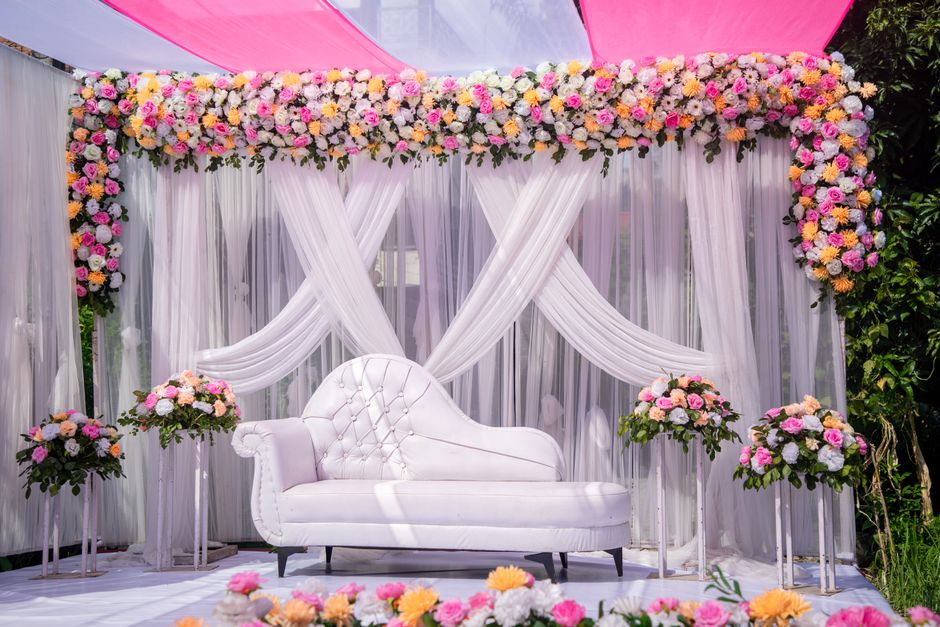
What Does the Bridal Pop-Up Infrastructure Checklist Look Like Against Industry Benchmarks?
| Requirement | The Palmington Solution | Industry Benchmark |
|---|---|---|
| Modular floor configuration | Hall + Turf combo, independently or combined | Fixed single-room layout with no outdoor extension |
| Climate control (indoor) | Air-conditioned hall for garment preservation | Portable AC units at additional cost |
| Generator backup | 3-hour (half-day) / 8-hour (full-day) dedicated generator | Shared generator with adjacent tenants; no SLA |
| Vendor load-in access | Dedicated vendor off-loading zones | Street-side drop-off, no dedicated bay |
| Changing / garment prep room | Ensuite changing and gift room on-site | Repurposed corridor or no facility |
| Guest capacity (combined) | Up to 220 guests (~90 indoor, ~120 turf) | Single-zone venues capped at 80–120 guests |
| Photography activation point | Indoor mirrored selfie-wall | Externally rented backdrop frame and print |
| VIP arrival logistics | Controlled entry point with valet coordination space | Open parking lot; no structured VIP routing |
| Security for high-value inventory | Enclosed venue with controlled access perimeter | Open-air market formats with minimal perimeter control |
| Location proximity (Lekki) | Ikate, Lekki — accessible from VI and Chevron corridors | Mainland or distant Lekki Phase 2 venues |
How Do You Structure the Load-In Schedule for a Day-of-Event Bridal Pop-Up?
A disciplined load-in schedule is what separates a smoothly executed showcase from a chaotic opening. Bridal fashion inventory is high-value and physically bulky—garment rails, mannequins, display boxes, steamer units, and branded signage all compete for the same doorway at the same time if you do not sequence arrivals. Below is a reference timeline for a bridal fashion pop-up in Lagos with a 12:00 PM public opening.
- 06:00 AM — Venue handover to organizer team. Walk the full floor with the venue coordinator. Confirm electrical socket locations, confirm air conditioning is operational, and mark vendor booth boundaries with floor tape or signage stakes before any vendors arrive.
- 06:30 AM — Priority vendor load-in begins (Tier 1: large infrastructure). Admit vendors with the heaviest or most complex setups first—full gown racks, mannequin stands, and large display furniture. These vendors must be in position before smaller booth neighbors begin unloading, or corridor access becomes blocked.
- 07:30 AM — Tier 2 vendor load-in. Standard booth vendors—accessories designers, bridal beauty teams, photographers, and styling stations—begin bringing in equipment. Confirm that each vendor’s steamer or electrical appliance is registered with the on-site electrical coordinator before plugging in.
- 08:30 AM — Tier 3 vendor load-in (digital and service vendors). POS terminal setup, Wi-Fi connectivity check, audio system soundcheck, and any experiential tech (e.g., digital lookbook stations) goes live. This is also when the mirrored selfie-wall and any branded backdrop installations should be finalized.
- 09:00 AM — Generator test run. Run all electrical loads simultaneously for a minimum of 15 minutes before guests arrive. Identify any overloaded circuits and redistribute load across available sockets. This step prevents mid-event power faults.
- 09:30 AM — Security briefing and perimeter lock. Security personnel take their positions at entry and exit points. High-value inventory—particularly loose accessories, jewelry, and couture pieces—should be confirmed secured in each vendor’s locked storage boxes or the venue’s ensuite gift room.
- 10:00 AM — VIP pre-arrival preparation. Confirm valet coordination zone is cleared of vendor vehicles. Place VIP directional signage. Brief front-of-house staff on guest list tiers and any media/press access restrictions.
- 11:00 AM — Soft open (invited press and content creators). Allow a controlled one-hour pre-opening window for media walkthroughs. This generates pre-event social content and allows organizers to catch any last-minute booth issues before general admission traffic begins.
- 12:00 PM — General guest admission opens. All vendor staff in position. Air conditioning at target temperature. Generator confirmed stable. Background audio at agreed volume level.
- Event close (TBD) — Controlled load-out begins in reverse tier sequence. Small vendors exit first; large infrastructure vendors exit last. Confirm all vendor vehicles have cleared the off-loading zone before the venue handback inspection.

How Do You Manage Guest Flow and Security at a Designer Bridal Showcase?
Guest flow management at a bridal fashion pop-up in Lagos requires more deliberate planning than a standard consumer market. Your attendee profile is primarily brides-to-be, their mothers, close friends, and potential wedding planners—groups that typically move slowly, linger at booths, and generate concentrated foot traffic around fitting zones and display stations. Left unmanaged, this creates dangerous chokepoints, especially in enclosed indoor spaces during peak afternoon hours.
The principal operational tools for guest flow control are spatial zoning, timed entry, and clear wayfinding. Spatial zoning means assigning specific categories of vendors to defined areas of the venue—grouping gown designers in one wing, accessories and jewelry in another, and bridal beauty in a third. This creates a logical guest journey rather than a random browsing experience, and it distributes foot traffic more evenly across the floor.
For events targeting more than 150 guests over a single day, timed entry slots of 30–45 minutes are an effective crowd-control mechanism. Issue numbered entry windows at registration, and brief security to enforce them at the perimeter. This is a standard practice at internationally produced fashion trade events and translates directly to the Lagos pop-up format.
Security protocols for high-value bridal inventory require particular attention. Couture gowns at a designer pop-up can carry individual price tags in the range of ₦800,000 to ₦5,000,000 or above. Each vendor booth should have at minimum one dedicated staff member responsible solely for inventory supervision—never leaving the booth unattended. The venue’s enclosed perimeter and controlled access points at The Palmington reduce external theft risk significantly compared to open-air market formats, but internal event security still rests with the organizer and individual vendors.
On the subject of VIP parking and arrival: Lekki’s road traffic, particularly on the Admiralty Way and Chevron Drive corridors, can compress significantly on weekends between 10:00 AM and 1:00 PM. For a bridal showcase targeting a premium clientele, communicate arrival time windows clearly in guest communications and confirm that the venue’s valet coordination zone can accommodate the expected vehicle volume. Third Mainland Bridge traffic also affects guests coming from the Island via Lagos Island routes on event days—factor this into your 12:00 PM or later public opening decision.
What Climate Control Conditions Does Bridal Inventory Require During a Pop-Up?
Garment preservation during a multi-hour or multi-day fashion pop-up is an operational concern that most Lagos event organizers overlook until it becomes a problem. Bridal fabric categories—lace, silk charmeuse, organza, tulle, and beaded appliqué—are sensitive to three environmental variables: temperature, humidity, and direct sunlight exposure.
Temperature: Garment storage areas should ideally be maintained between 18°C and 22°C. Indoor air conditioning in an enclosed hall delivers this reliably. Outdoor turf zones in Lagos, particularly between April and October during the rainy season, present a different challenge: high ambient humidity (often above 75% relative humidity) can cause fabric to absorb moisture, leading to limp silhouettes and compromised embellishment adhesion on beaded pieces.
For outdoor turf display zones at The Palmington, the operational recommendation is to use the turf exclusively for guest reception, networking, and brand experience activations—not for primary garment display. Reserve all couture and ready-to-wear inventory within the climate-controlled indoor hall. This dual-zone operational approach was effectively demonstrated during The Wellness Edit (co-hosted with MBFP, October 18–19, 2025), where the indoor and outdoor zones served distinct programmatic functions, maintaining product integrity indoors while driving community engagement on the turf.
Direct sunlight is a secondary concern for outdoor display. UV exposure over a four-to-six hour event window can cause dye migration on certain fabric dyes, particularly on ivory, blush, and champagne tones common in bridal collections. If any outdoor display is operationally necessary, deploy tent canopies rated for UV protection and ensure inventory is rotated out of direct exposure every 90 minutes.
If your bridal fashion pop-up runs across two days—which delivers significantly better vendor ROI and greater guest attendance reach across a Lagos weekend—confirm with your venue that overnight garment storage is available in a secured, air-conditioned environment. This eliminates the logistical burden of vendor load-out and load-in on day two and protects high-value inventory from overnight humidity and temperature fluctuation.
To discuss your specific bridal fashion pop-up requirements, confirm spatial configurations, power load capacities, and available event dates at The Palmington in Lekki, contact the activations team directly at thepalmington.com/contact.
Frequently Asked Questions
Costs vary based on venue hire, vendor fees, logistics, and marketing. Venue hire for a premium space in Lekki is typically the largest fixed cost. Contact The Palmington directly for current activation pricing. Vendor booth fees charged to participating designers typically range from ₦50,000 to ₦300,000 depending on booth size and event duration.
Using the industry standard of 12–16 square metres per vendor booth (including circulation), a combined indoor and outdoor venue footprint comfortably accommodates between 12 and 25 vendors without compromising guest flow. The Palmington’s Hall and Turf combo supports this range when configured for exhibition-style layouts.
November through March is operationally optimal. Lagos’s dry season reduces humidity risk for fabric display, improves road conditions for guest attendance, and avoids the April–October rainy season. Weekend dates in November and February align with peak wedding planning cycles, when brides are actively sourcing designers and vendors.
Yes. Relying on public grid power (NEPA) for any commercial event in Lagos is an operational liability. Garment steamers alone can draw 12–24 kW across a 20-booth showcase. A dedicated generator with a confirmed fuel-supply plan is non-negotiable. The Palmington provides generator backup for both half-day and full-day bookings.