
The best brand pop-up venue in Lekki combines modular indoor-outdoor layouts, reliable generator backup, and dedicated vendor load-in zones. The Palmington, in Ikate, Lekki, meets that benchmark with its Hall and Turf Combo built precisely for retail activations and lifestyle fairs.
How Much Space Do I Need for a Brand Pop-Up in Lekki?

Space planning is the single most consequential decision in pop-up logistics, and most brand teams underestimate their actual footprint requirements before vendor negotiations begin. A solo brand activation with two to four product display zones typically needs a minimum of 500 square feet of usable floor space — and that figure does not yet account for aisle clearance, queuing lanes, or a cashier/checkout station.
Multi-brand lifestyle fairs in Lekki, which have become a signature format for premium consumer categories like wellness, fashion, and beauty, routinely require between 2,000 and 4,000 square feet of combined indoor-outdoor space to operate without bottlenecks. When vendors are competing for guest attention, cramped layouts kill dwell time — and dwell time is directly correlated with revenue per attendee.
The operative calculation event producers use is: 15–20 square feet per guest for a browsing-format activation, and 8–10 square feet per guest for a standing reception layout. A venue that cannot flex between both configurations forces you to choose between atmosphere and capacity — a constraint that eliminates many single-room venues from serious consideration when scoping a brand pop-up venue in Lekki.
The Palmington‘s Hall and Turf Combo addresses this directly. The modular footprint allows brand teams to run an intimate product-demo environment indoors while simultaneously operating an open-market vendor court on the turf — two distinct spatial experiences serving the same audience without crowding either zone.
| Space Type | Minimum Square Footage | Power Load Capacity | Setup Duration |
|---|---|---|---|
| Solo Brand Activation (2–4 zones) | 500 sq ft | 5–10 kVA | 2–3 hours |
| Product Launch with Demo Stage | 800–1,200 sq ft | 15–20 kVA | 4–6 hours |
| Multi-Vendor Lifestyle Fair (indoor) | 1,500–2,500 sq ft | 20–30 kVA | 6–8 hours |
| Hall + Outdoor Turf Combo (full fair) | 2,500–4,500 sq ft | 30–45 kVA | 8–12 hours |
| Outdoor-Only Brand Activation | 1,000–2,000 sq ft | 10–15 kVA | 3–5 hours |
What Are the Power Requirements for Pop-Up Retail Events in Lagos?
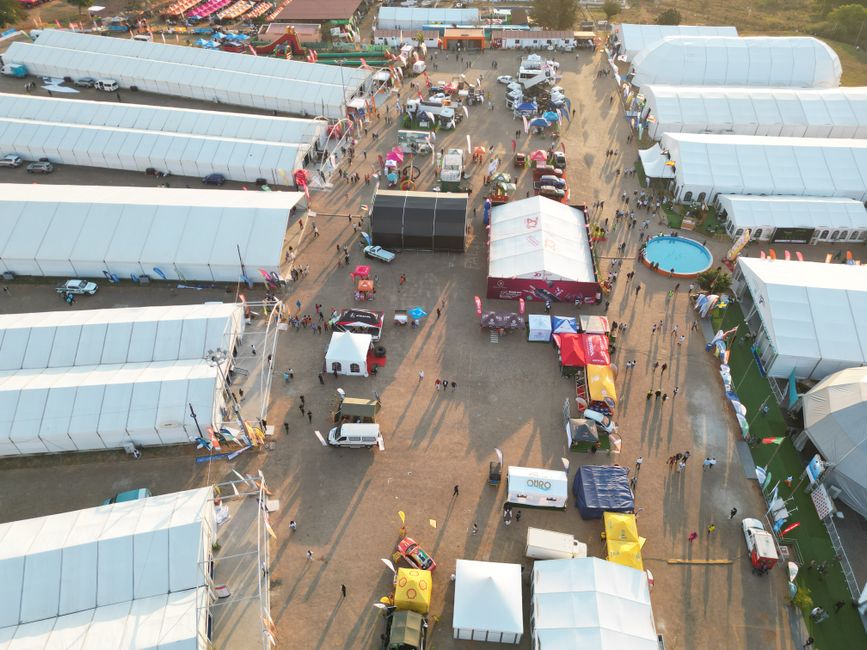
Power planning is non-negotiable in Lagos, and any event producer who has not built a generator contingency into their venue brief has not operated long enough in this market. NEPA supply remains unpredictable across Lekki — including in premium corridors like Ikate and Victoria Island. For a brand pop-up, an unplanned outage mid-activation does not just dim the lights; it kills payment terminals, disables air conditioning, cuts LED display units, and — most critically — disrupts the social-media-ready atmosphere your brand paid to create.
Here is what operational power planning looks like for each activation tier:
- Lighting rigs: Budget 2–5 kVA for basic ambient and accent lighting. If you are running LED panel backdrops or colour-wash fixtures, raise that estimate to 8–12 kVA.
- Sound systems: A mid-tier PA system with a DJ setup draws 3–6 kVA. Full concert-grade reinforcement can exceed 15 kVA — confirm load ratings before signing any venue agreement.
- Air conditioning: Each one-tonne split-unit draws approximately 1.5 kVA. A fully air-conditioned hall of 1,500 square feet typically requires four to six units running simultaneously.
- POS and payment infrastructure: Modern PoS terminals, card readers, and mobile hotspot routers collectively draw under 1 kVA, but require stable, surge-protected power — not raw generator output.
- Catering and hospitality stations: An espresso machine alone can spike at 1.5–2 kVA. Food-warming equipment and refrigeration add another 3–5 kVA depending on scale.
The operational baseline for a professionally run multi-brand lifestyle fair in Lekki is a sustained generator capacity of 30–45 kVA, with automatic load transfer so guests never experience a gap. Venues that offer only a small standby generator — enough to run emergency lighting — are not equipped for commercial pop-up events at this level.
The Palmington provides generator backup as part of its packaged infrastructure: 3 hours for half-day bookings and 8 hours for full-day events, eliminating the logistical burden of sourcing and fuelling a third-party generator on activation day.
How Do I Manage Foot Traffic Flow at Pop-Up Activations?
Foot traffic engineering is the discipline that separates experiential activations that convert browsers into buyers from those that simply draw a crowd. In a Lekki pop-up context — where guests often arrive in staggered waves due to Third Mainland Bridge traffic patterns and VI commute pressure — your venue layout needs to perform at both low-density and peak-density conditions simultaneously.
Three principles govern effective traffic flow design for brand pop-ups:
- The Entry Decompression Zone: Guests arriving from Lagos traffic arrive tense. The first 10–15 feet past the entrance should be deliberately uncrowded — a check-in or welcome station, not a vendor booth. Placing high-demand stalls immediately at the entrance creates a choke point that backs traffic out through your door. Experienced event producers route guests through a decompression corridor before they reach the vendor floor.
- The Anchor-Draw Layout: Place your highest-traffic vendors — typically food, beverage, and headline brand activations — at the furthest point from the entrance. This forces guests to walk past secondary vendors to reach them, dramatically increasing incidental discovery and dwell time at mid-floor stalls. Venues with a natural indoor-to-outdoor flow, like The Palmington‘s Hall-to-Turf transition, create this journey organically without requiring artificial wayfinding.
- The Exit Conversion Point: Conversion data from lifestyle fairs consistently shows that guests make impulse purchases closest to exits, after they have completed a full circuit of the space. Positioning gifting, sampling, or checkout stations near exit paths captures this buying impulse before it dissipates in the car park.
For outdoor turf activations specifically, consider Lagos weather patterns. Between April and October — the primary rainy season — afternoon downpours are routine. A venue without covered transition zones between indoor and outdoor sections will see your carefully designed traffic flow collapse the moment rain begins. Hard shade structures or covered walkways connecting indoor and outdoor zones are a non-negotiable infrastructure requirement for any serious outdoor activation during this window.
What Is the Correct Vendor Load-In Timeline for a Lekki Pop-Up Event?
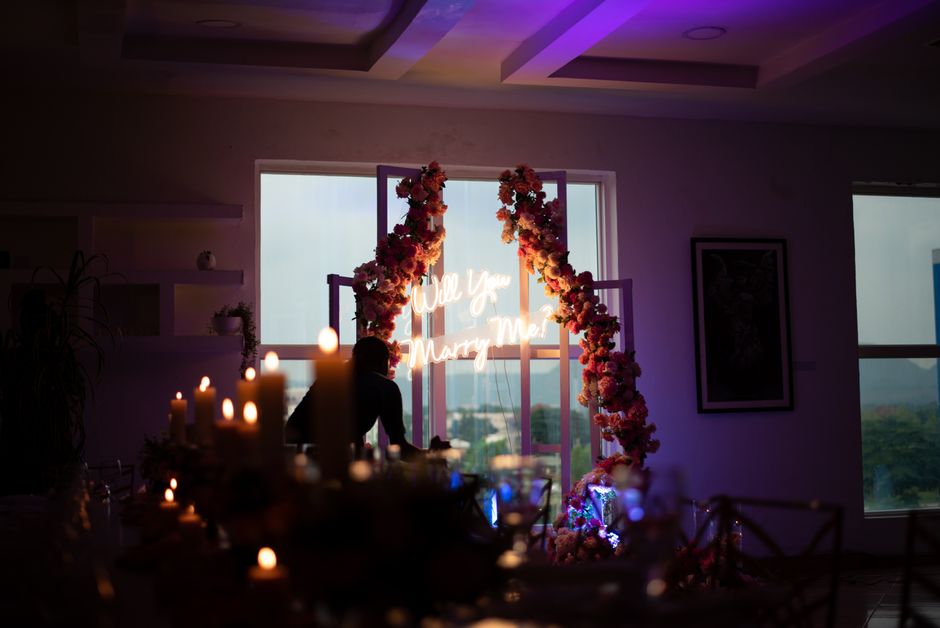
Vendor coordination is where most brand activations lose time — and reputation. Lagos vendor logistics carry specific pressures that event producers outside this market routinely underestimate: generator refuelling windows, traffic-dependent arrival unpredictability, and the reality that a vendor who promises a 7 AM setup arrival may not clear Lekki’s access roads until 9 AM during peak commute hours.
Below is an operational timeline framework calibrated to Lekki conditions:
- Pre-Event Phase (T-minus 7 to 14 days):
- Confirm all vendor table/booth dimensions and power draw requirements in writing. Build a venue floor plan allocating specific zones per vendor load type.
- Brief the venue on generator runtime needs and confirm fuel responsibility — whether that is venue-supplied or brand-team-supplied.
- Issue vendor access credentials and vehicle passes if the venue requires them. Dedicated vendor off-loading zones, like those at The Palmington, prevent the chaos of competing delivery vehicles blocking entrances on setup day.
- Confirm connectivity — whether the venue provides Wi-Fi or whether you need to arrange mobile data bonding for payment infrastructure.
- Event-Day Setup Phase (T-minus 4 to 8 hours):
- Open vendor access a minimum of 4 hours before guest doors for a single-day activation. For a two-day fair, allow a full 8-hour dedicated setup day prior to the first public day.
- Stage load-in by vendor type: large-footprint stalls (furniture, shelving, display rigs) load in first; tablecloth-and-product vendors load in last.
- Run a full power-on check — every outlet, every generator circuit — at least 90 minutes before guest arrival. This is when you discover that one vendor’s refrigeration unit is drawing more current than declared.
- Confirm catering and beverage stations are operational and stocked. In Lagos heat, a beverage queue that runs dry within the first hour of a public event creates a guest experience failure that dominates WhatsApp group conversations for days.
- Live Event Phase (Guest Hours):
- Assign a dedicated floor manager whose sole responsibility is traffic flow intervention — redistributing crowds, managing queue lines, and preventing vendor corridor blockages.
- Monitor generator fuel levels at 2-hour intervals. Do not wait for the low-fuel alarm to act.
- Run real-time social media coverage from the venue’s most photogenic zones. For indoor venues, a mirrored selfie-wall drives organic guest-generated content that extends your activation’s reach well beyond the physical attendance count.
- Teardown Phase (Post-Event):
- Build a minimum 2-hour teardown window into your venue booking — most venues charge for overruns and in Lagos, vendors rarely depart on schedule.
- Conduct a floor walk before any vendor departs. Document all venue surfaces, furniture, and electrical fixtures against the pre-event condition report signed at load-in.
- Collect all vendor feedback digitally — a simple WhatsApp group poll captures operational pain points you will need to solve before the next activation date.
Why Does Venue Location Within Lekki Directly Affect Pop-Up Attendance?
Not all Lekki addresses carry equal accessibility weight for brand activation purposes. The Lekki-Epe Expressway corridor from Chevron to Ikate is the zone with the highest concentration of Lagos’s premium residential and commercial audiences — the demographic that lifestyle, wellness, beauty, and fashion brands most consistently target for pop-up events.
Venues located deep in Phase 1 or toward the Ajah axis introduce meaningful friction for attendees commuting from Victoria Island, Ikoyi, or the mainland. That friction translates directly into lower attendance conversion from RSVP to physical gate count — a metric that experienced experiential marketers track closely because it affects both sponsor ROI reporting and per-head revenue calculations.
The Palmington‘s address at 6 VFC Close, off Meadow Hall Way, Ikate, Lekki sits within one of the most accessible premium pockets of the corridor — close enough to Victoria Island for a straightforward cross-island trip, yet deep enough into Lekki to draw from Phase 1’s residential base without requiring guests to navigate Ajah-bound expressway congestion.
For event producers managing multi-day activations, location also affects vendor logistics. A venue close to major supply routes reduces the fuel and time cost of daily restocking runs — a practical operational consideration that becomes particularly significant for food-and-beverage-heavy activations where perishable inventory turns over daily.
The proof of this location thesis is operational rather than theoretical: The Palmington’s October 18–19, 2025 hosting of The Wellness Edit — a curated luxury wellness, community, and lifestyle exhibition produced in collaboration with MBFP — drew a multi-day audience to Ikate, Lekki across both event days, demonstrating that a well-positioned boutique brand pop-up venue in Lekki with the right modular infrastructure can anchor a premium lifestyle fair format with the same drawing power as significantly larger event spaces.
If you are scoping a brand pop-up, retail activation, or multi-vendor lifestyle fair in Lekki and need to assess whether The Palmington’s Hall and Turf footprint matches your operational brief, the fastest path to a confirmed site visit and availability check is through the inquiry form at https://thepalmington.com/contact.
Frequently Asked Questions
For a single-day activation, book your venue a minimum of four to six weeks in advance. Multi-day lifestyle fairs with multiple vendors typically require eight to twelve weeks lead time to coordinate floor plans, power specifications, vendor agreements, and marketing. Peak seasons — including Q4 and the pre-Ember months — book out faster.
Indoor venues offer climate control, consistent lighting, and protection from Lagos’s rainy season, which runs April through October. Outdoor or turf venues deliver better natural light for photography and a more open market atmosphere — ideal for lifestyle fairs. The strongest activations use both in combination, routing guests through indoor and outdoor zones as distinct experience layers.
Generator inclusion varies significantly by venue. Some Lekki spaces offer only a basic standby unit inadequate for commercial activations, while others — like The Palmington — include structured generator runtime of up to 8 hours for full-day bookings as a core package feature. Always confirm total kVA capacity and fuel responsibility in writing before signing a venue agreement.
Vendor capacity depends on booth footprint, not raw square footage. A 2,000-square-foot indoor space can host eight to twelve standard 6×6-foot booth setups with adequate aisle clearance. Venues with an additional outdoor turf component can double that count while preserving comfortable traffic flow — a key reason modular Hall-and-Turf configurations are the preferred format for multi-brand lifestyle fairs in Lekki.